The Renter's Insurance Gap That Cost My Client $12,000
Marcus Whitfield
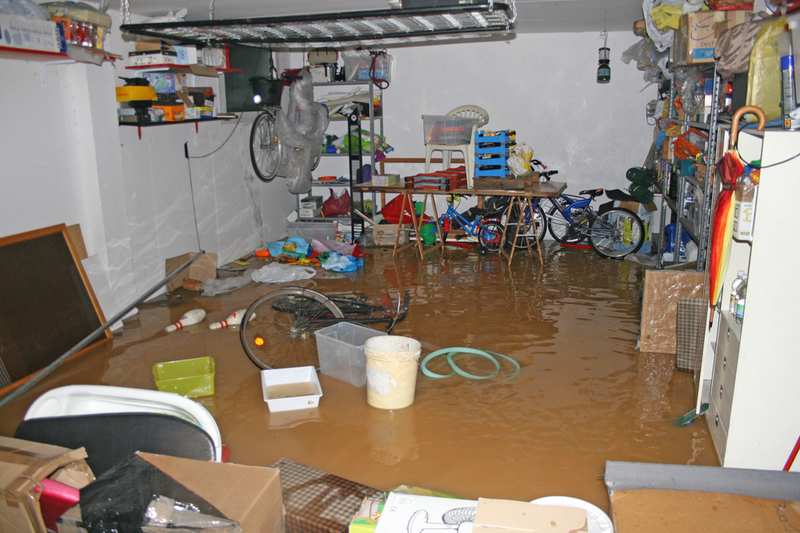
The adjuster looked at the basement and said the magic words. Not covered. I stood there in my Chicago bungalow, watching my client Denise stare at the water line on her drywall. Three feet of sewer backup. Her couch, her books, her daughter's college textbooks, all of it floating in someone else's wastewater. She had renter's insurance. She paid $18 a month for it. And it covered exactly zero of the $12,000 in damage. I have been in insurance for 21 years, and I still get angry when I see this happen.
Here is the thing. Renter's insurance is not homeowner's insurance with a smaller premium. It is a completely different animal with completely different gaps. Most policies cover fire, theft, and liability. Most do NOT cover sewer backup, flood, or earth movement. Denise's policy was a standard HO-4 form. I have seen hundreds of them. They all look the same until they do not. And when they do not, it costs you $12,000.
I spent sixteen years as an underwriter. I know what the fine print says. But Denise is a dental hygienist. She works 40 hours a week, raises two kids, and trusted that $18 a month meant she was protected. That is not her fault. That is the industry's fault for selling coverage like it is a commodity when it is actually a contract with more holes than a Chicago pothole after winter.
The Coverage Gap Calculator would have caught this in about 90 seconds. Denise would have entered her policy type, her ZIP code on the South Side, and her basement apartment status. The tool would have flagged sewer backup as an uncovered peril and suggested a rider. A rider that costs maybe $40 a year. Not $12,000. That is the difference between information and ignorance.
Denise's story is not unique. I see it every month. Someone buys the cheapest renter's policy because their landlord requires it. They think they are covered. They are not. They are complying with a lease requirement, not protecting their stuff. The difference between compliance and protection is about $200 a year in riders. Flood coverage in Chicago. Sewer backup in any building older than 1970. Replacement cost instead of actual cash value. These are not luxuries. They are necessities that the base policy deliberately omits.
The Home Insurance Valuator would have told Denise that her $12,000 in personal property needed replacement cost coverage, not actual cash value. With ACV, her 3-year-old couch is worth maybe $200. With replacement cost, she gets the $800 she needs to buy a new one. That is a $600 difference on one item. Multiply that by a basement full of furniture, electronics, and clothing. The math is brutal.
I am not here to sell you a policy. I am here to tell you that the policy you have is probably wrong. Read the declarations page. Look for the words sewer backup, flood, and earth movement. If they are not there, you have a gap. In Chicago, that gap is not theoretical. It is a Tuesday afternoon in July when the storm drains fail and your basement becomes a swimming pool.
The Life Insurance Needs Estimator is the third tool I wish Denise had used. Not because of the flood. Because her $18 policy had a liability limit of $100,000. If someone had been injured in that basement, if a neighbor had slipped on the water she was pumping out, she would have been personally responsible for anything over $100,000. For a dental hygienist making $58,000 a year, that is a bankruptcy event. That is a life-destroying number hidden in a $18 policy.
Pick up your renter's policy. Not the marketing brochure. The actual policy. Turn to the exclusions section. That is where the truth lives. If you do not understand what you are reading, find someone who does. Because $18 a month feels cheap until it costs you $12,000 and everything you own.
— Marcus Whitfield, Chicago
I have been to Denise's basement since the flood. We put in a sump pump. We added the sewer backup rider. Her new policy costs $31 a month instead of $18. That $13 difference is the cost of actual protection. She pays it without complaint. Because she has seen the alternative. The alternative is $12,000 and a month of sleeping on her sister's couch in Oak Park while the drywall dries.
The insurance industry calls this upselling. I call it honesty. The base policy is a teaser rate. It is designed to get you in the door. The exclusions are designed to keep the company profitable. There is nothing wrong with profit. There is something wrong with pretending a teaser rate is the same as coverage. It is not. It is a costume. And when the basement floods, the costume comes off.
I live in Chicago. I know what summer storms do. I know what winter pipes do. I know that buildings built before 1950 have clay sewer lines that fail every time the city gets 3 inches of rain in an hour. This is not speculation. This is Tuesday. If you rent in Chicago and you do not have sewer backup coverage, you are not insured. You are hoping. And hope is not a policy. Hope is what you do when you cannot afford the truth.